
SEO copywriting helps people find, understand and assess a useful answer. It connects the words customers use with accurate information and an appropriate next step.
It should not depend on a keyword density target, an exaggerated headline or a promise to outrank competitors. Good writing supports a page that is accessible, informative and honest about the offer.
Start with the question and the decision
Identify what the reader needs to learn or evaluate. A beginner looking up a term needs a clear explanation; a product evaluator may need compatibility, limitations, evidence and current purchase information.
Use customer questions, relevant search reporting and tools such as Google Keyword Planner to investigate language and demand. Google’s tool is designed for advertising research and provides estimates; its bid and competition figures should not be treated as a prediction of organic rankings. Check current access requirements before building a workflow around it.
Make the headline a reliable promise
State the subject and useful outcome in words the audience recognizes. Numbers or emotional language are options when accurate, not compulsory ingredients. Avoid creating curiosity that the page cannot satisfy.

Write a summary that matches the content
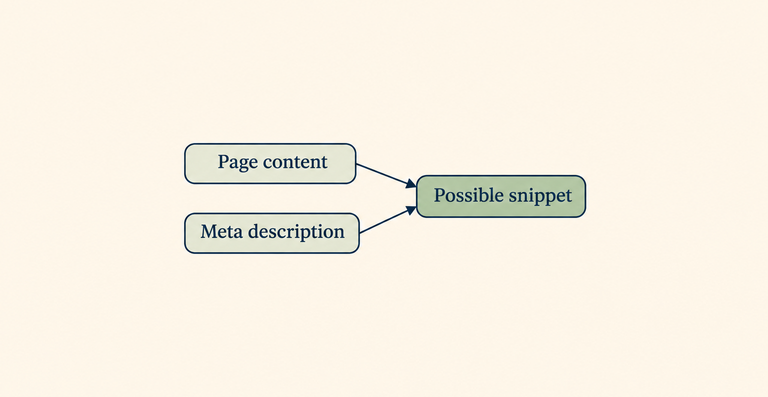
It is useful to write engaging meta descriptions, but Google may choose other on-page text for a search snippet and may form a title link from several sources. Neither field guarantees exact display or a particular ranking.
Explain what the page actually covers and include a meaningful distinction where appropriate. A summary that attracts unsuitable clicks can create disappointment without helping the business.
Organize the answer around useful detail
Use headings to show the structure and make it easy to locate a question. Keep each section focused, explain unfamiliar terms and give a concrete example when it helps. Write enough to support the decision rather than expanding to an arbitrary word count.
Here, high-quality content should include accurate claims and relevant evidence, not merely polished sentences. Distinguish a real case study from an illustration, check dates and source details and avoid presenting an unsupported opinion as an established result.
Make links serve the reader
Link to the next useful explanation with a descriptive label. Internal links can help navigation and discovery; external sources can support a claim or provide necessary context. Adding links does not automatically make a page authoritative or guarantee a ranking increase.
For example, a reader assessing a social publishing product may need SU Social’s documented features and system requirements. A clear account of what the product supports helps more than an unqualified superlative.
Keep images meaningful and accessible
Choose relevant, permitted assets and write alt text for the image’s purpose in context. A functional image may need an action label, while a complex chart may need an adjacent explanation. Do not use image descriptions as another place to repeat a keyword list.
Optimize file delivery without losing essential detail and check the page on a phone. The main offer and important conditions should remain available as readable text.

Distribute and measure without confusing the signals
When promoting your content through social channels or permission-based email, describe why the answer is useful. Adapt the introduction to the audience and keep the destination consistent. Social reactions or referral visits are not proof of a Google ranking effect.
Use search reporting to review relevant queries, impressions and clicks, and website/business records to assess useful actions. Check tracking definitions and allow for other changes and attribution limits before crediting a copy revision with every result.
Maintain the answer when product information, source evidence or customer needs change. The goal is a page that earns the click it invites and helps a suitable reader make progress.
Meet the Author
Cyrllssy Moore is an E-commerce Consultant & the Business Development Director for an e-commerce development company. She is competent both in the business & technical side of E-commerce businesses, her projects have been widely distributed internationally


Leave a Reply