
Quora can introduce useful explanations to people actively asking about a subject. Referral traffic follows only when a reader has a reason to explore further. Write an answer that works on Quora first, then link to a genuinely relevant resource when the platform’s rules permit it.
Choose a question you can answer responsibly
Start with questions related to real expertise and the information your business can provide. Read the complete question and existing answers. A popular question may already be answered well; a more specific unanswered question may be a better opportunity to contribute.
Do not assume the traffic will be leading to higher conversion rates simply because someone asked about a related subject. A person researching a topic, solving a personal problem and selecting a supplier can have very different needs. Avoid using high-stakes health or financial topics as casual traffic opportunities without the relevant expertise and care.
For a business writing about digital marketing strategies, a narrow practical question can work better than “How do I succeed online?” For example, a hypothetical print shop could explain what file information a customer should check before ordering labels. That answer can be useful independently of whether the reader ever visits the shop.

Conceptual example of supporting an explanation with useful evidence.
Make the profile and affiliation clear
Use accurate credentials and a concise description of your relevant experience. Do not imply that a general professional background qualifies you to answer every topic. Include an appropriate website route where the profile supports it, and keep information current.
Quora’s affiliation policy requires relevant business connections to be disclosed clearly. If you discuss your own product or employer, say so in the answer or the credential shown with it as appropriate. A reader should not mistake a commercial perspective for an independent customer recommendation.
Select for relevance as well as likely readership
Looking for questions with high engagement potential can help prioritize effort, but do not rely on a single visible count. Consider whether the question is current, whether you have something distinct to add and whether a useful next resource exists. Avoid answering dozens of near-duplicate questions with the same promotional paragraph.
Keep a short list of questions and the source material needed to answer them. Check any time-sensitive procedure against primary documentation. If the answer depends on a particular version, market or circumstance, state that scope rather than presenting it as universal.
Write the useful part before the link
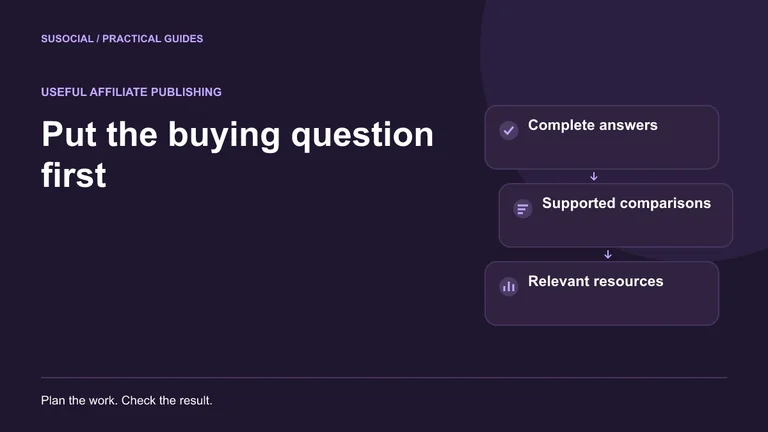
- Answer directly. Give the core conclusion or method in the opening.
- Explain the reasoning. Describe when the answer applies and what could change it.
- Use a practical example. Identify hypothetical examples and avoid inventing tests or results.
- Support factual claims. Cite appropriate sources and distinguish evidence from opinion.
- Offer further detail when useful. Explain what a linked resource adds.
Quora’s question and answer policies say the gist should be understandable without leaving the platform and prohibit affiliate links. A teaser that sends readers away for the actual answer can be treated as promotional spam. Keep links selective and do not disguise their destination.
Use readable paragraphs, headings or lists where helpful. Add an image only when it explains something and you have the necessary rights. Avoid decorative charts or screenshots that imply evidence you do not have.
Participate in Spaces with a clear purpose
Quora Spaces can curate material around a shared topic. Review the Space’s rules and editorial direction before contributing. A Space is not an unrestricted distribution list for every article on your website.
If you maintain one, define its subject and moderation responsibilities. Combine useful original explanations with permitted references and respond to relevant questions. Only create an additional Space if you have the capacity to maintain it.

Conceptual illustration of discovering a useful resource.
Give visitors a destination that continues the task
The linked page should deliver the detail promised in the answer: a full checklist, product specification or relevant guide. Check mobile usability, accessibility and whether the information is current. Avoid sending a reader to an unrelated homepage or an unexpected sales form.
Quora pages can be discovered through search, but indexing and placement are controlled by search engines. Do not treat Quora links as a guaranteed ranking tactic for your own site. Use recurring questions to improve website resources because those resources help readers, not because repeated promotional links might manipulate visibility.
Review referral quality and maintain answers
If preparing supporting content in SU Social, its draft preparation guide explains post entry and drafts. Each Quora answer still needs a question-specific review and compliance with current platform rules; a prepared template is not a substitute for reading the question.
Examine relevant referral visits and completed outcomes where measurement is available. Recognize tracking gaps and avoid claiming that every later sale came from the answer. Watch for questions that reveal missing information or misunderstanding on the website.
building authority takes accurate contributions and honest interaction over time. Return to correct outdated instructions, repair broken references without changing their meaning and respond to substantive corrections. A small set of useful answers is more valuable than a large footprint of repeated links.
Meet the Author
Aoki Tam is a freelance writer and content creator. She has a keen eye for detail and a passion for creating engaging and informative content. She is adept at crafting blog posts, articles, social media content, and other types of digital content that resonate with audiences.


Leave a Reply